
Dr. Goldstein holds a Certificate of Prosthodontics from USC, the specialty built specifically for crown, bridge, and full-arch restoration. In 1999, Brasseler Dental asked him to design the Goldstein Crown Kit, the instruments dental professionals use for crown preparation. He still teaches the technique at the Dental College of Georgia, and in professional lectures and webinars worldwide.
What Is a Dental Crown?
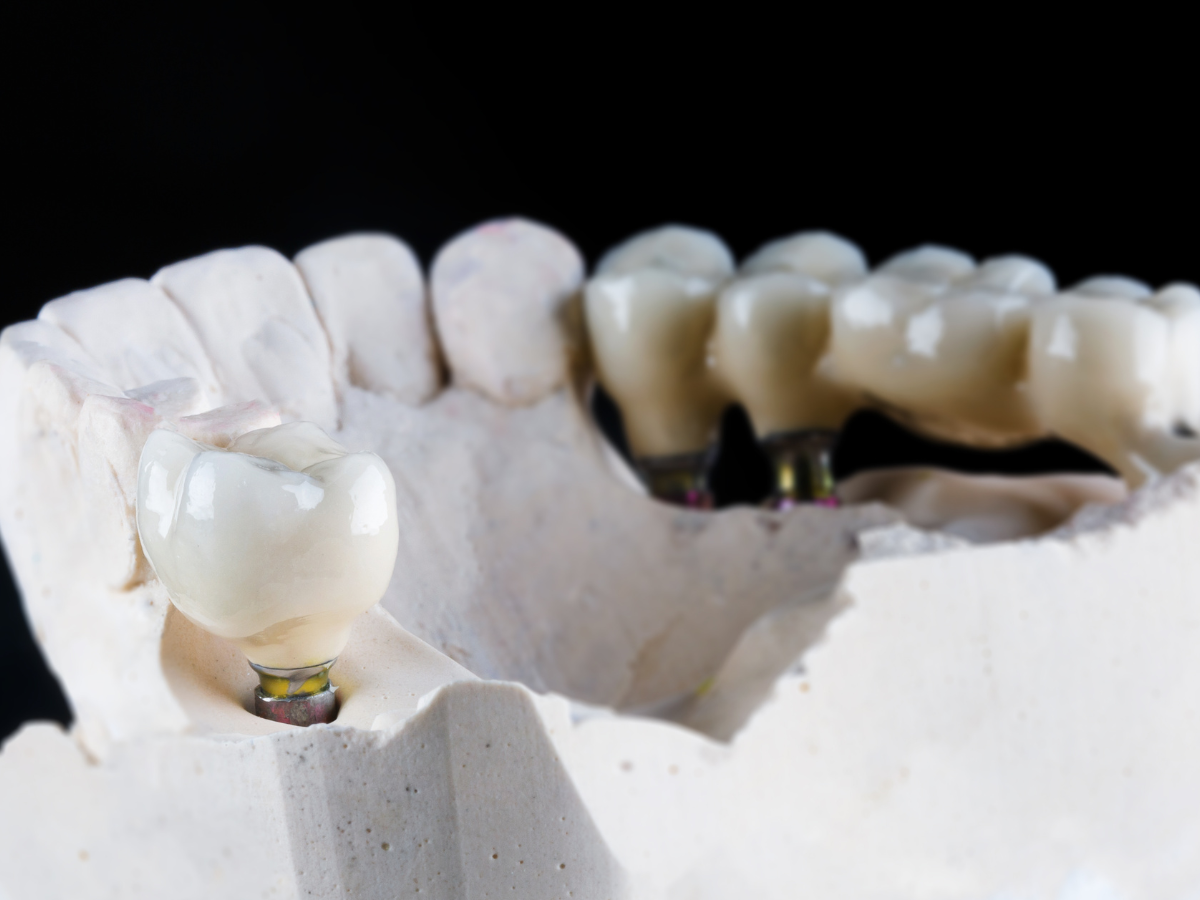
A dental crown is a tooth-shaped restoration that fits over a damaged, weakened, or missing tooth, restoring its shape, function, and appearance. Crowns are placed when a tooth can no longer support a filling: after a root canal, following significant decay or fracture, as the cap for a dental implant, or as the anchor for a dental bridge.
The crown is one of dentistry’s most common restorations, and one where the margin for error is narrow. A crown must fit precisely at the gumline margin, distribute bite forces correctly, and match surrounding teeth in color and translucency. Crown ceramics have advanced significantly over the past two decades, and material selection matters more than most patients realize.
Dr. Goldstein has published on crown preparation systems and ceramic crown materials, and has taught crown preparation at the Dental College of Georgia for more than 30 years. The precision of preparation, the choice of material, and the quality of the laboratory work all determine how long a crown performs and how natural it looks.
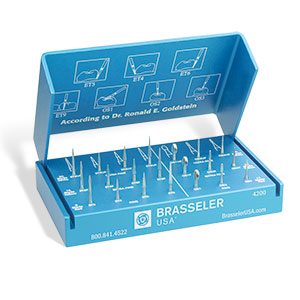
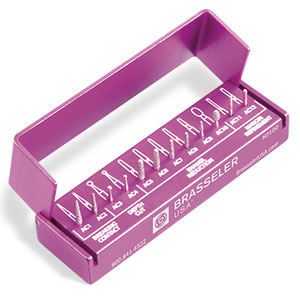
In 1999, Brasseler Dental worked with Dr. Goldstein to develop the Goldstein Crown Kit, a set of instruments designed specifically for crown preparation and placement. Dentists across the country use instruments he designed to do the same work he does here. That is not a marketing claim. It is a matter of published record.
Crown Materials: Porcelain, Zirconia, and When Each Is Right
The material determines the durability, appearance, and long-term performance of the crown. Three options are most commonly used, and the right choice depends on tooth position, bite load, and aesthetic goals. Dr. Goldstein discusses all available options with each patient as part of treatment planning.
All-Ceramic (Porcelain) Crowns
All-ceramic crowns offer the closest match to natural tooth structure in color and light transmission. They are the preferred choice for front teeth, where appearance is the priority. Today’s ceramics, including EMax (lithium disilicate), are also well-suited for high-stress molar positions, combining aesthetic excellence with durability.
Zirconia Crowns
Zirconia is the strongest ceramic option for back teeth. It resists chipping and fracturing and holds up under heavy bite forces. Monolithic zirconia is metal-free, biocompatible, and has demonstrated strong long-term performance. Layered zirconia crowns combine zirconia’s strength with a porcelain exterior for better aesthetic blending. A newly available cement system now allows zirconia crowns to be bonded with exceptional reliability, making them an increasingly common choice at Goldstein Dental Center.
Porcelain-Fused-to-Metal (PFM) Crowns
PFM crowns were the industry standard for decades and remain a reliable option for specific cases. Dr. Goldstein offers all three crown types and selects the appropriate material for each patient’s specific anatomy, bite, and clinical goals, based on evidence and long-term performance data, not default protocol.
Dr. Goldstein’s 2001 publication on the Crown Preparation System and his 2016 work on Enamic Crowns reflect decades of focus on the material science behind durable, aesthetic restorations.

The Crown Procedure at Goldstein Dental Center
Most crown cases are completed in two appointments.
At the first appointment, the tooth is prepared: shaped to create a precise fit for the crown. An impression is taken and sent to the dental laboratory. A temporary crown protects the prepared tooth while the permanent restoration is fabricated, typically 10 to 14 days.
At Goldstein Dental Center, crowns are laboratory-fabricated, not milled in-office. Dr. Goldstein seats each crown under a microscope to verify marginal fit before cementing. Same-day milling systems have improved significantly, and GDC recently invested in a new state-of-the-art intraoral scanner. When the clinical evidence supports same-day results at the same quality standard, they will be offered here. Until then, the protocol is laboratory fabrication. Patients are not test subjects.
At the second appointment, the temporary is removed. The permanent crown is checked for fit, bite, and color match before being bonded in place.
Dr. Goldstein’s approach to tooth preparation is conservative: remove only what is necessary to seat the crown properly. Excessive reduction shortens the lifespan of the underlying tooth structure and often results in the need for a root canal. That philosophy runs through every case here.
With proper care, crowns placed at Goldstein Dental Center are built to last 10 to 15 years or more.
What Is a Dental Bridge?
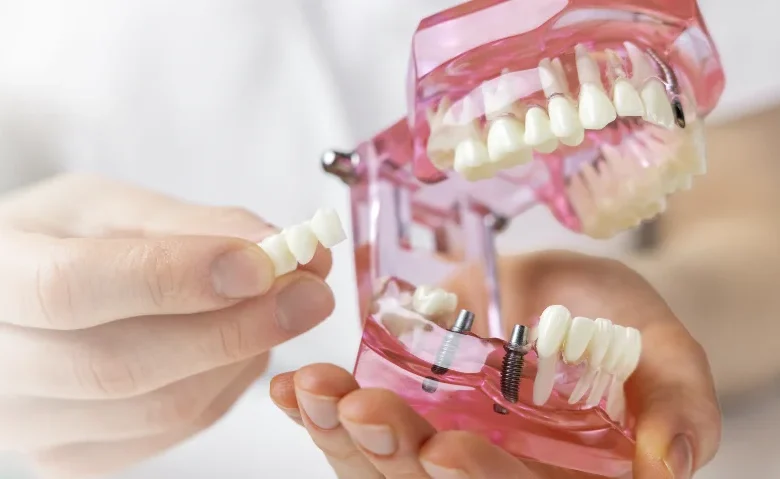
A dental bridge replaces one or more missing teeth by anchoring a false tooth, called the pontic, to the healthy teeth on either side. Those anchor teeth, called abutments, receive crowns. The bridge spans the gap as a single fixed unit.
Missing teeth do more damage over time than many patients realize. Neighboring teeth drift toward the open space. The jawbone beneath the gap begins to resorb without a root to stimulate it. Bite mechanics shift, placing added stress on the jaw joint and surrounding teeth. A bridge stops that process and restores chewing function, appearance, and the structural integrity of the bite.
Three types of bridges are placed at Goldstein Dental Center:
Traditional Bridge
Anchors to crowns on both adjacent teeth. The most common and most stable option for larger gaps.
Cantilever Bridge
Anchors to a crown on one adjacent tooth only. Appropriate for specific positions; used less frequently because of bite force considerations.
Maryland Bonded Bridge
Attaches to the backs of adjacent teeth without full crown preparation. A more conservative option for certain front-tooth replacements.
One point patients do not always hear plainly: a bridge is only as good as the crowns anchoring it. The preparation of those abutment teeth, the precision of the fit, and the choice of materials all determine how the bridge holds up over time. A prosthodontist is the specialist trained to make exactly these decisions. That is what the Certificate of Prosthodontics represents.
For single-tooth replacement, a dental implant is often the longer-term alternative, as it preserves the jawbone and does not require preparing the adjacent teeth. A consultation will determine which option is right for your specific situation.
The Bridge Procedure: What to Expect
Bridge placement is typically completed in two appointments.
At the first appointment, the abutment teeth are prepared to receive crowns. An impression or scan is taken, and a temporary bridge is placed to protect the prepared teeth and maintain your bite while the permanent bridge is fabricated in the laboratory, generally 10 to 14 days.
At the second appointment, the temporary bridge is removed. The permanent bridge is checked for fit, bite alignment, and color match before being cemented in place.
Bridges require particular attention to cleaning under the pontic. Water flossers and bridge flossers make this manageable. With consistent care, a well-placed bridge lasts 10 to 15 years or more.
Frequently Asked Questions: Crowns & Bridges
What is a dental crown?
A crown is a tooth-shaped restoration placed over a damaged, weakened, or treated tooth to restore its shape, strength, and appearance. Crowns are used after root canals, for severely decayed or fractured teeth, as implant restorations, and as the anchors that hold a dental bridge in place.
What are dental crowns made of?
The most common materials are zirconia, all-porcelain (including EMax), and porcelain-fused-to-metal (PFM). Zirconia is a strong choice for back teeth. All-porcelain is often used for front teeth where appearance is the priority and is also an excellent option for molars. The right material depends on tooth position, bite load, and aesthetic goals. Dr. Goldstein discusses all options with each patient before any decision is made.
How long do dental crowns last?
Most crowns last 10 to 15 years with proper care. Material choice and the precision of placement are the two biggest variables. Good oral hygiene, regular dental visits, and avoiding habits like grinding or chewing ice all extend crown life significantly.
How much does a dental crown cost?
Crown costs vary based on tooth position, material selected, and the complexity of the case. Goldstein Dental Center accepts dental insurance and will pre-estimate your insurance reimbursement before treatment begins. We are happy to provide a detailed estimate after an examination.
What is a dental bridge?
A dental bridge replaces one or more missing teeth by spanning the gap with a fixed restoration anchored to crowns on the adjacent teeth. It is a fixed option that restores chewing function, prevents neighboring teeth from drifting, and maintains the structural integrity of your bite.
How much does a dental bridge cost?
Bridge cost depends on the number of teeth being replaced, the materials used, and the complexity of the case. Goldstein Dental Center accepts dental insurance and will pre-estimate your insurance reimbursement before treatment begins. A consultation will include a detailed cost estimate.
Is a dental bridge permanent?
A bridge is fixed in place and is not removable by the patient. It functions like natural teeth. With proper care, a bridge typically lasts 10 to 15 years before replacement or rebonding may be needed.
Our patients us in
Metro Atlanta
Ready to discuss crowns or bridges? Schedule a consultation with Dr. Goldstein.
Serving patients in Buckhead, Sandy Springs, Vinings, and the greater Atlanta area.