


Visit the Patient Center to learn what to expect from your first visit, forms, financial policies, and frequently asked questions!
What Is Esthetic Dentistry? And Why It's Different From Cosmetic Dentistry
Most patients use “cosmetic dentistry” as the catch-all term for any dental work that improves the appearance of their teeth. Esthetic dentistry is something more specific: a discipline that treats appearance and function as inseparable, and that has its own professional organization, credentialing standards, and peer community. If you have seen the term in reference to your dentist, here is what it actually means.
Schedule a Consultation with Dr. Goldstein
The Core Distinction: Cosmetic vs. Esthetic Dentistry
Cosmetic dentistry focuses on appearance: making teeth whiter, straighter, more uniform. It is an outcome-oriented framing. Esthetic dentistry asks a different question: what does the ideal outcome look like when appearance, function, and long-term structural integrity are considered together?
The difference shows up most clearly in complex cases. A cosmetic approach to a smile makeover might produce beautiful veneers that look exceptional on day one. An esthetic approach to the same case ensures that those veneers are designed around the patient’s bite, the way their teeth contact and load against each other, the health of the supporting bone and gum tissue, and the long-term durability of the materials chosen. The appearance is the goal. The function is what makes it last.
That integrated philosophy is not universal. It is specific to practitioners who have trained in it, whose peers hold them to it, and whose clinical process reflects it. The AAED is the professional organization where that standard is maintained.
What the American Academy of Esthetic Dentistry Is
The American Academy of Esthetic Dentistry was founded in 1975 with a specific purpose: to advance the practice of esthetic dentistry through education, research, and the maintenance of clinical standards among its members.
Membership is by invitation only. To become a member, a dentist must be nominated by three existing members, submit documented evidence of academic teaching, publications and editorial service, honors and awards, scientific presentations, and service to the dental profession, and commit to ongoing continuing education. It is not a paid directory. There is no application form. The AAED is not the kind of organization you join by writing a check. These are the teachers, researchers, and elite practitioners in esthetic dentistry.
In any metropolitan area, the number of AAED members is small. The criteria are specific and the process is real. When you see AAED listed in a dentist’s credentials, it means something specific about the quality of their work, not just their interest in the field.
What AAED Membership Actually Signals About a Dentist
The distinction that matters most to patients: AAED membership is not self-reported. A general dentist cannot decide to call themselves an AAED member. The organization evaluates your work and your peers decide whether it meets the standard.
That peer review dimension is what sets AAED apart from most dental credentials patients encounter. Membership in study clubs, completion of continuing education courses, and attendance at dental conferences are self-managed. AAED membership is externally validated.
You can verify AAED membership at aaed.org. If a dentist claims AAED credentials and is not listed there, the claim is not accurate.
Active membership requires ongoing engagement: continuing education commitments, case presentation at meetings, and maintained participation in the peer community. A dentist who has been active in the AAED for years is a different clinical animal than one who earned a membership and then disengaged.
How Esthetic Dentistry Shows Up in Clinical Practice
The esthetic approach shows up in how a case is planned, not just how it is executed.
Treatment planning in esthetic dentistry starts from the desired outcome and works backward. For a veneer case, that means designing the final result first, building a mock-up to confirm it, and then planning the preparation and restoration around the confirmed design. The dentist knows what they are building toward before they remove any tooth structure.
Material selection in esthetic dentistry considers both appearance and functional durability together. A material that produces exceptional aesthetics but fractures under occlusal load is not the right choice, regardless of how it photographs. The esthetic dentist selects materials based on the specific demands of each case.
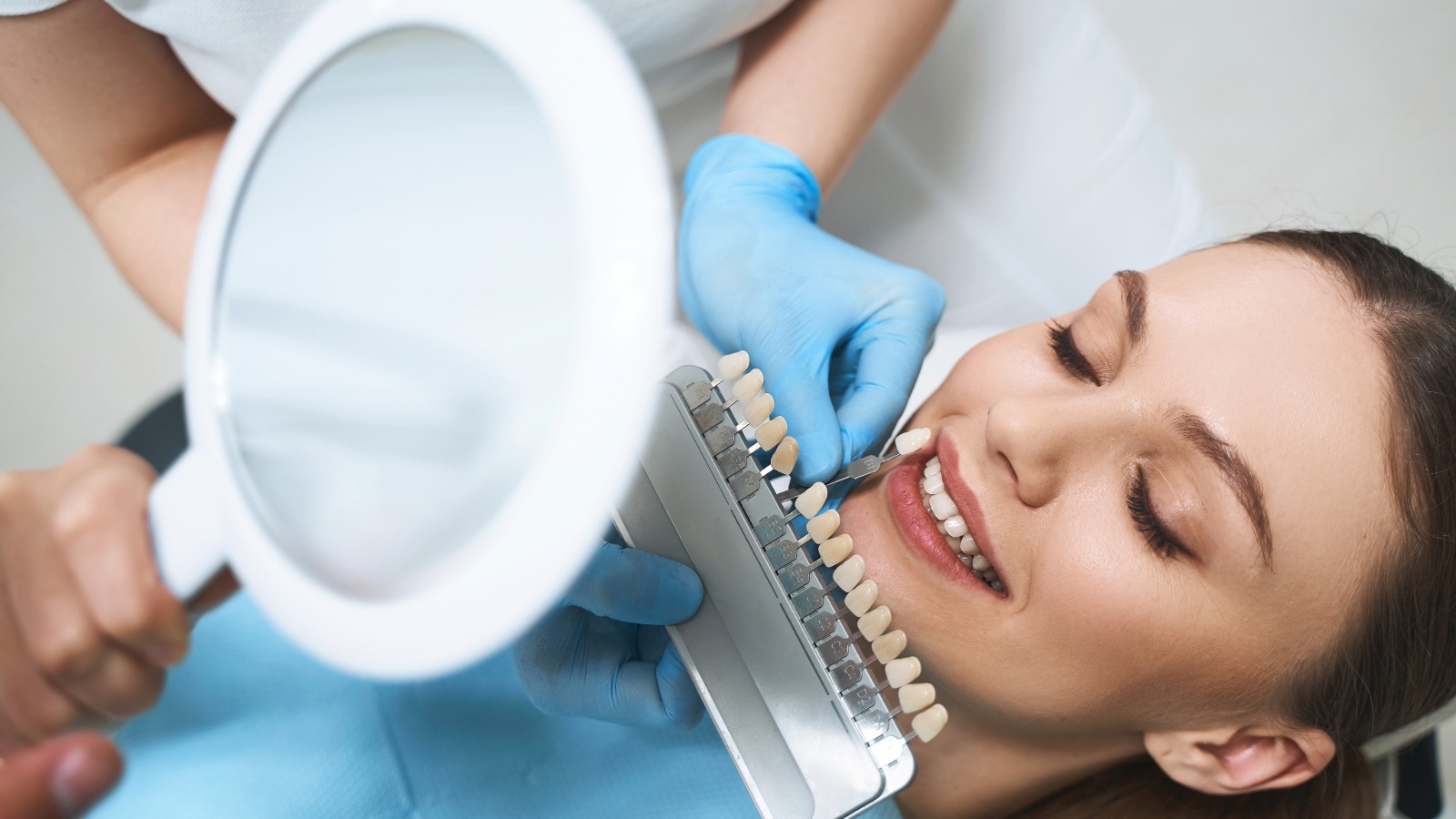
The laboratory relationship is central to esthetic dentistry practice. A ceramist who works closely with the dentist on shade matching, morphology, and surface texture is producing a different result than a production lab turning out veneers from digital scans. The AAED community has some of the best ceramist relationships in the country because members compete at that level.
The philosophy of “do less better” runs through esthetic dentistry in a way that does not run through all cosmetic dentistry. Preparing fewer teeth for more conservative restorations, using bonding where veneers are not warranted, and preserving natural tooth structure wherever possible — these are clinical commitments that the esthetic philosophy requires and that the AAED peer community enforces.
Dr. Goldstein’s Relationship With the AAED
Dr. Cary Goldstein has been an AAED member for more than 30 years and served as president of the organization in 2020, the highest level of elected leadership within the AAED. The presidential role involves representing the organization’s standards to the broader dental community, overseeing the educational program at the annual meeting, and setting the direction for how esthetic dentistry standards evolve.
A dentist who has served as AAED president has not just met the membership criteria. They have been elected by their peers, who have seen their clinical work, to lead the organization. It is a credential earned through demonstrated standing within the peer community, not through tenure or administrative process.
At Goldstein Dental Center, the esthetic philosophy that the AAED represents shapes every case. The planning-first approach, the master ceramist relationship, the conservation of tooth structure, and the integration of function with aesthetics are the standard, not exceptions.
Membership in the AAED requires more than case quality. Prospective members must demonstrate the ability to present clinical work to peers: teaching, communicating, and showing esthetic dentistry principles in action. As an active member, Dr. Goldstein is called upon periodically to teach at the AAED annual meeting. It is a credential that requires ongoing demonstration, not a one-time achievement.
Beyond his clinical practice, Dr. Goldstein has contributed to the published literature in esthetic dentistry across three decades. His publications include articles in the Journal of the American Dental Association, Quintessence International, and Contemporary Esthetics, as well as two textbooks: Computers in Dentistry (1997) and Imaging in Esthetic Dentistry (1998). He currently serves as a reviewer for the Journal of Esthetic and Restorative Dentistry and as a board member of Inside Dentistry magazine. These are not honorary titles. A journal reviewer evaluates submitted clinical research for publication. A board member advises editorial direction for a professional publication read across the specialty.
Three Questions to Ask Your Dentist About Esthetic Credentials
If you are evaluating a dentist who claims esthetic dentistry expertise, these questions will tell you quickly whether the claim is substantive:
- Are you a current AAED member? (Verifiable at aaed.org: a member will have no hesitation answering this.)
- Will I see a mock-up of the proposed result before you prepare my teeth? (An esthetic dentist always says yes.)
- Who fabricates your restorations, and can I see examples of their work on cases like mine? (A ceramist relationship worth having is one the dentist is proud to name.)
These are not trick questions. A dentist who practices at the level the AAED represents will answer all three immediately and specifically.
Schedule a Consultation with Dr. Goldstein
Serving patients in Buckhead, Atlanta, Sandy Springs, Roswell, Alpharetta, and surrounding communities.
Frequently Asked Questions
What is esthetic dentistry?
Esthetic dentistry is a discipline that treats dental appearance and function as inseparable. Unlike “cosmetic dentistry,” which focuses primarily on visual outcomes, esthetic dentistry plans cases around how the final result will look, function, feel, and hold up over the long term. The American Academy of Esthetic Dentistry is the professional organization that defines and maintains standards for the field.
What is the difference between cosmetic and esthetic dentistry?
Cosmetic dentistry is an outcome-oriented marketing category — it describes dental work that improves appearance. Esthetic dentistry is a clinical philosophy that integrates appearance with function, longevity, and structural integrity. In practice, an esthetic dentist plans for the whole picture; a cosmetic approach may optimize only for visual outcomes.
What is the AAED?
The American Academy of Esthetic Dentistry is an invitation-only professional organization founded in 1975. Membership requires nomination by three existing members, documented evidence of academic teaching, publications, scientific presentations, and service to the profession, and ongoing continuing education commitments. It is not a paid directory and cannot be self-applied for. Members can be verified at aaed.org.
How do I know if my dentist is an esthetic dentistry specialist?
Check for AAED membership (verifiable at aaed.org), prosthodontic specialty training, and evidence that they use a mock-up process before any tooth preparation. These three indicators together tell you that the dentist is practicing at the level the esthetic dentistry field defines, not just marketing themselves with the terminology.
Is esthetic dentistry covered by insurance?
Esthetic and cosmetic dental procedures, including veneers, whitening, and elective reshaping, are generally not covered by dental insurance. Some functional restorations that also serve an esthetic purpose (crowns, implant-supported restorations) may have partial coverage depending on the plan.
What procedures fall under esthetic dentistry?
Esthetic dentistry encompasses porcelain veneers, smile makeovers, tooth whitening, dental bonding, gum contouring, and the restorative procedures that correct both function and appearance. In complex cases, it also includes the planning and sequencing of implant restoration, bite correction, and preparation for orthodontic work.
Learn more on our blog!
Stay up to date on your dental health and hygiene with our blog!