


Visit the Patient Center to learn what to expect from your first visit, forms, financial policies, and frequently asked questions!
How Much Do Dentures Cost? A Prosthodontist's Honest Breakdown
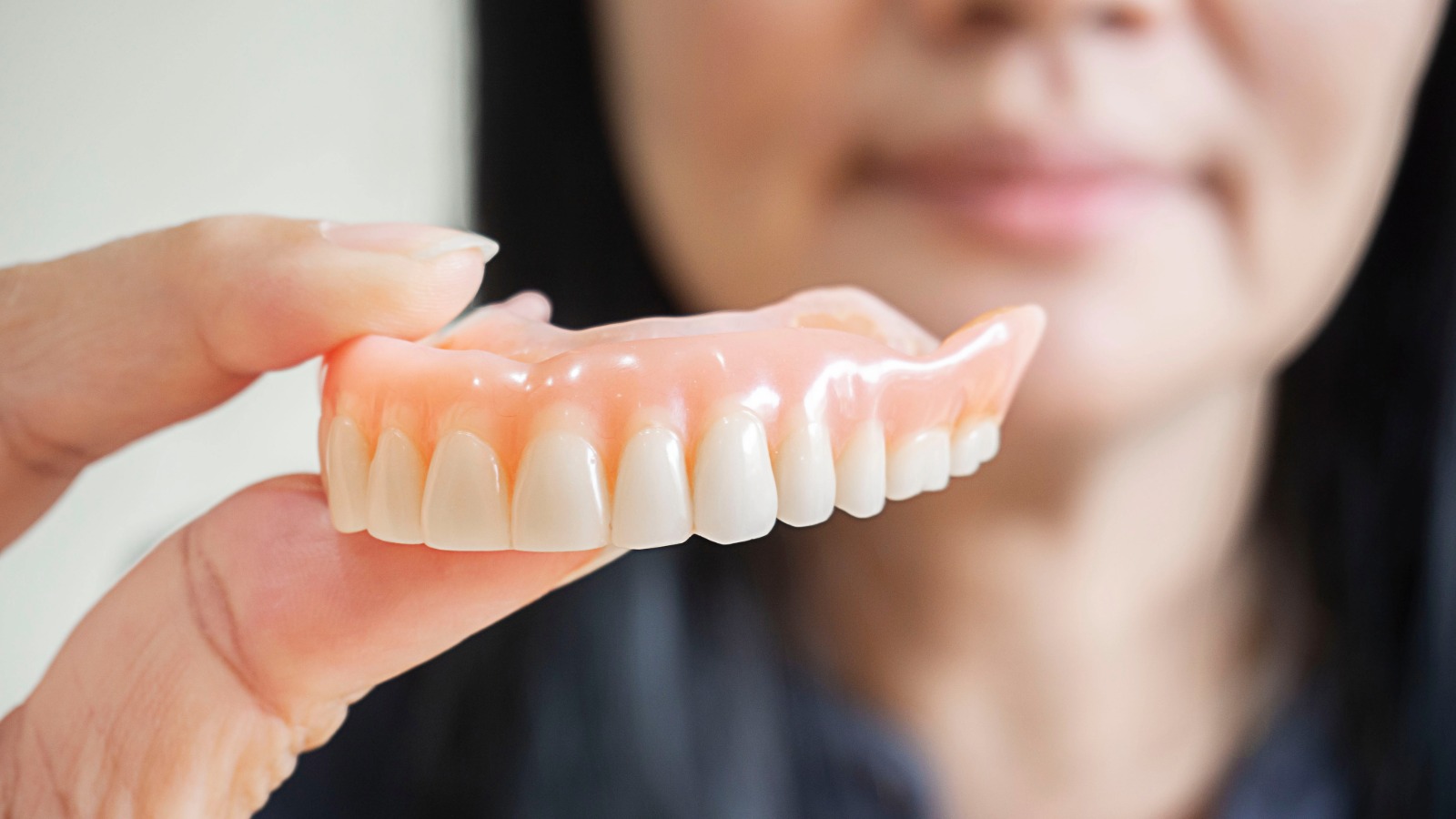
Most cost guides give you a table. This one gives you context. Dr. Cary Goldstein is a board-certified prosthodontist in Atlanta with 40 years of full-arch prosthodontic cases. He knows what dentures cost, and what makes the difference between a price and a result worth living with.
Denture Costs by Type: What to Expect
Nationally, the cost of dentures varies widely by type, materials, and who fabricates them. Here is what the data shows for each category.
Traditional complete dentures replace a full arch of missing teeth with a removable prosthetic that rests on the gum line. Nationally, basic options start around $1,000 per arch; mid-range fabrication runs $1,500 to $2,500; premium prosthodontist-fabricated dentures typically range from $2,500 to $4,000 or more per arch. A full set averages between $3,000 and $8,000 depending on provider and materials.
Partial dentures replace several missing teeth while natural teeth remain. These range from approximately $1,300 to $3,000, depending on the framework material (resin vs. cast metal), the number of replacement teeth, and the complexity of the clasp design.
Immediate dentures are placed on the day of extractions to avoid leaving patients without teeth during healing. They are typically similar in cost to conventional complete dentures but require additional adjustment appointments as the tissue heals and the fit changes.
Removable implant-supported overdentures attach to dental implants for improved stability, particularly in the lower arch. These typically range from $3,500 to $6,500 per arch, depending on the number of implants used. The section below covers why these often make financial sense long-term.
Fixed full-arch implant prosthetics (All-on-4 and similar) replace all teeth in an arch with a permanent, non-removable bridge anchored to implants. These are not removed for cleaning and function more like natural teeth than any removable option. At Goldstein Dental Center, fixed full-arch prosthetics are priced at approximately $28,000 to $32,000 per arch.
What Actually Drives the Price Difference
A denture priced at $800 and one priced at $3,500 are not the same product. The gap comes down to three things.
Materials. Economy dentures use standard acrylic with prefabricated teeth. Higher-end fabrication uses premium acrylic or porcelain teeth selected for size, shape, and color match, and denture bases crafted from materials that hold their shape longer under the forces of daily wear.
Provider credentials. General dentists can place dentures competently. Prosthodontists specialize in exactly this. The specialty training adds two to three years beyond dental school, focused entirely on replacing and restoring teeth, including the biomechanics of bite, occlusion, and the anatomical factors that affect fit and function over time. The result is a prosthetic designed with more precision from the start, which translates to better comfort, better aesthetics, and a fit that holds up longer.
Prosthetic design complexity. The process matters as much as the materials. A properly fabricated denture includes detailed impressions, a wax try-in before anything is finalized, and careful bite registration to ensure the prosthetic works in harmony with your jaw. Skipping or rushing these steps is how patients end up with dentures that look wrong or feel wrong, and eventually need to be redone.
Why Implant-Supported Dentures Cost More (and Why It Often Makes Sense)
Implant-supported dentures carry a higher upfront cost. For many patients, they are still the better financial decision.
Here is the core issue with traditional dentures: they rest on the gums, and over time, the jawbone underneath changes shape as it responds to the absence of tooth roots. This is called bone resorption. As the bone recedes, the denture that fit well at year one fits less well at year three, and poorly by year five. Adjustments help, but there is a ceiling. Eventually the prosthetic needs to be replaced.
Implant-supported overdentures anchor to titanium posts placed in the jawbone. The implants stimulate the bone the same way natural tooth roots do, which significantly slows resorption and maintains the facial structure. The prosthetic stays stable, patients eat and speak with more confidence, and the overall fit holds for far longer.
For lower-arch cases specifically, overdentures represent the minimum standard Dr. Goldstein recommends to most patients. The lower jaw resorbs faster, the tongue creates more movement, and the physics of a removable prosthetic without implant support are simply harder to manage. More implants give better outcomes; some support is better than none.
The long-term cost equation: a traditional lower denture that needs relining every few years and replacement every eight to ten years will accumulate significant costs over time. A well-placed overdenture supported by two to four implants often proves less expensive over a 15-year horizon, and far more comfortable in the interim. It will not move during eating or speaking, but most importantly it provides confidence to the user that these are their teeth, and they do not need to be removed each day for cleaning.
Does Dental Insurance Cover Dentures?
Most dental insurance plans cover a portion of traditional denture costs, typically 50% after the deductible, up to the annual maximum. The catch: annual maximums on most plans run $1,000 to $2,000, which leaves a significant portion out-of-pocket for mid-range and premium fabrication.
Implant-supported dentures are handled inconsistently by insurers. Some plans cover the prosthetic component (the denture itself) while excluding the implants. Others exclude both. Patients in Georgia typically find that their plan’s denture benefit applies to the final restoration, with implant placement covered under a separate major services benefit if at all.
At Goldstein Dental Center, the team verifies your insurance benefits before the first appointment and provides a clear breakdown of what is covered before any treatment begins. For costs not covered by insurance, CareCredit financing is available.
What to Ask Before Choosing a Denture Provider
The cost of dentures is a reasonable starting question. It is not the only one worth asking.
Before you commit to a provider, consider asking these four:
What is your specialty training in full-arch prosthetics? General dentists place dentures regularly. Prosthodontists train for years doing almost nothing else. The answer tells you who is making the decisions about your bite, your aesthetics, and the long-term fit of your prosthetic.
Do you do a wax try-in before final fabrication? A wax try-in lets you see and feel the denture before it is finished. You can assess the fit, the look, and the way it functions before anything is locked in. Not every provider includes this step. It matters.
How do you approach bite registration? The relationship between your upper and lower jaws affects how your denture functions, how much strain it puts on your gum tissue, and how comfortable it feels over time. Bite registration done carefully results in a prosthetic that works with your anatomy. Done carelessly, it is the source of most persistent complaints about denture discomfort.
How long will this denture maintain its fit? There is no single honest answer, but how a provider responds tells you something. A thoughtful answer covers material quality, bone resorption expectations, and realistic timelines for adjustment and eventual replacement. A vague answer should raise questions. Pink resin palates in dentures are the norm, a prosthodontist will discuss with you how a much thinner metal palate is undetectable to others and much stronger and longer lasting. It may be worth the added investment.
Frequently Asked Questions
How much do dentures cost?
Nationally, traditional complete dentures average $1,000 to $4,000 per arch depending on materials and the type of provider. A full set (both arches) runs $3,000 to $8,000 on average. Implant-supported overdentures typically range from $3,500 to $6,500 per arch. Pricing varies significantly based on the complexity of your case, the materials used, and whether you are working with a general dentist or a specialist.
How much do dentures cost in Atlanta?
Atlanta-area denture costs track closely with national averages. Traditional full dentures run $1,500 to $4,000 or more per arch at a prosthodontist’s office. For an accurate estimate based on your specific situation, a consultation is the right starting point. The investment varies depending on the type of denture, whether extractions or bone grafting are needed, materials used, and the level of prosthetic customization involved.
Are dentures covered by insurance?
Most dental insurance plans cover traditional dentures at 50% after the deductible, subject to annual maximums that typically range from $1,000 to $2,000. Implant components are often excluded or covered under a separate major services benefit. Coverage for the prosthetic portion of implant-supported dentures varies by plan. At Goldstein Dental Center, insurance benefits are verified before treatment begins so you know exactly what to expect.
How much do implant-supported dentures cost?
Implant-supported overdentures (removable dentures anchored to implants) typically range from $3,500 to $6,500 per arch, depending on the number of implants and the complexity of the case. The higher upfront cost often reflects a better long-term investment compared to traditional dentures, which require relining and eventual replacement as the jawbone changes shape over time.
What is the difference between a prosthodontist and a general dentist for dentures?
A prosthodontist completes two to three years of specialty training beyond dental school, focused specifically on replacing and restoring teeth. For full-arch prosthetics, that training covers occlusion, bite mechanics, implant prosthetic design, and the aesthetic factors that determine whether a denture looks and functions the way it should. General dentists can place dentures competently. A prosthodontist is a specialist in it.
How long do dentures last?
Traditional complete dentures typically last five to eight years before replacement, with relining or rebasing needed as the underlying bone changes shape. Implant-supported dentures last significantly longer because the implants slow bone resorption and maintain the fit. With proper care and regular follow-up, an implant-supported overdenture can remain well-fitting for ten to fifteen years or more.
The cost question is a reasonable place to start. A consultation is where the real answer begins.
At Goldstein Dental Center, the first step is understanding your specific situation: what teeth remain, what bone structure you are working with, and what type of prosthetic will serve you best over the long term. The cost conversation follows from there, with insurance benefits verified in advance.
Serving patients in Atlanta, Buckhead, Sandy Springs, Dunwoody, Alpharetta, and the surrounding metro Atlanta area.
Learn more on our blog!
Stay up to date on your dental health and hygiene with our blog!