


Visit the Patient Center to learn what to expect from your first visit, forms, financial policies, and frequently asked questions!
What Is a Prosthodontist? (And Why It Matters for Complex Cases)
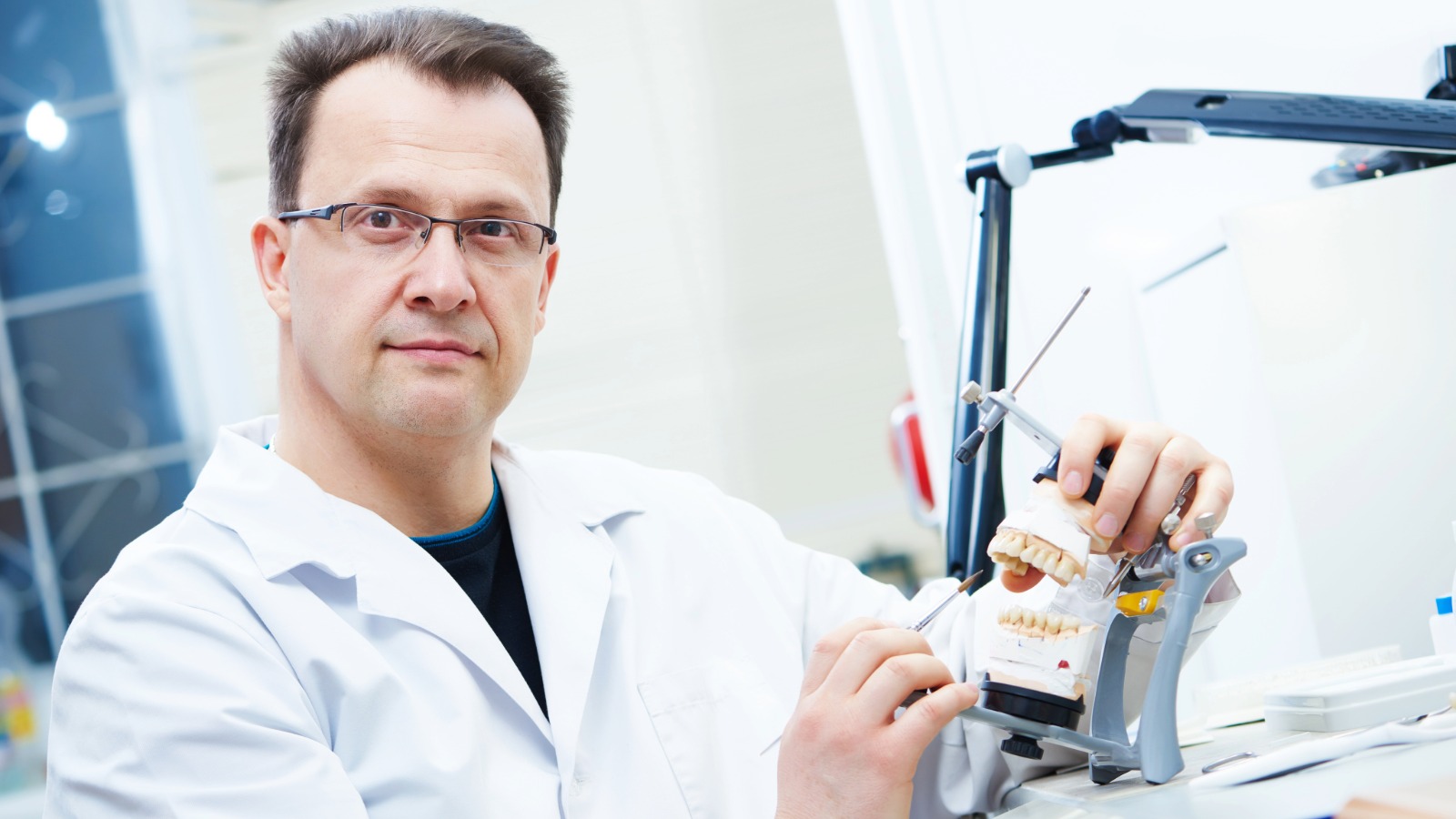
Prosthodontics is one of twelve dental specialties recognized by the American Dental Association. It exists because some cases are too complex for general practice. If you heard the word for the first time this week, you may be dealing with one of those cases. Here is what it means.
What Is a Prosthodontist?
A prosthodontist is a dentist who completed dental school and then spent two to three additional years in an accredited postgraduate residency, focused entirely on the restoration and replacement of teeth.
That training covers full-arch rehabilitation, implant-supported restorations, complex bite reconstruction, cosmetic and esthetic dentistry, and cases involving multiple missing or damaged teeth. It is not a generalist curriculum with advanced coursework added on top. It is a specialty built from the ground up for cases that require a different level of clinical preparation.
Prosthodontics is one of only 12 specialties formally recognized by the ADA. Fewer than 3% of practicing dentists in the United States are prosthodontists. That number is not low by accident. The training is demanding, the program slots are limited, and the cases this specialty handles are among the most technically complex in all of dentistry.
What Does a Prosthodontist Treat?
Prosthodontists handle cases that involve significant tooth loss, structural damage to the bite, or the kind of complexity that comes when several problems need to be addressed at once.
The most common reasons a patient is referred: full mouth reconstruction (rebuilding the entire bite, often combining implants, crowns, and bite restoration), implant-supported full-arch restorations, severe tooth wear or bite collapse from long-term grinding, congenital conditions affecting tooth development, tooth loss from trauma or accident, and cases where previous dental work has failed and needs to be addressed correctly.
General dentists handle the majority of dental care: cleanings, fillings, routine crowns, and straightforward cosmetic procedures. That covers most patients. The difference becomes material when the case extends to the whole bite, multiple missing teeth, or the structural foundation of the jaw. That is the clinical territory prosthodontics was built for. If you have been told you may need full mouth reconstruction, that case type is covered in detail on the Full Mouth Reconstruction page.
Prosthodontist vs. General Dentist: What’s the Difference?
Both complete the same four years of dental school. After that, the paths diverge.
A general dentist enters practice. A prosthodontist enters a three-year accredited residency, training specifically in full-arch restoration, bite reconstruction, implant prosthetics, and complex multi-tooth esthetics and rehabilitation. The curriculum covers case types that most general dentists encounter rarely, if at all.
The comparison that holds up: think of a general practitioner and a surgeon. Both hold medical degrees. The question is what you need done. For routine care, the general practitioner is the right answer. For something structurally complex, the specialist is the right answer. A prosthodontist is not a better version of a general dentist. The specialty exists for a different kind of problem.
When Should You See a Prosthodontist?
Your general dentist may refer you, or you may seek one out directly. No referral is required.
Clear signals that a prosthodontist is the right provider: you need multiple teeth replaced or restored that will look natural, your bite has changed or broken down over time, you have significant bone loss, you have been told you need full mouth reconstruction, or previous dental work has failed and you want it addressed properly this time.
Not every complex-feeling case needs a prosthodontist. When a general dentist can handle it well, they should. But knowing when to refer, or when to seek a specialist directly, is part of making a sound decision about serious dental work.
What to Look for in a Prosthodontist
A prosthodontist’s training is verifiable in a way that most dental marketing claims are not. ADA-recognized prosthodontic programs are accredited; the training is standardized. That is the floor.
Above that floor, look for someone who is currently active in complex clinical practice, not someone who completed a residency decades ago and shifted toward simpler cases. Active complexity is how craft stays current.
The strongest signal of ongoing expertise is involvement in teaching or peer-recognized professional leadership. A prosthodontist who trains other dentists, contributes to the field’s body of knowledge, or holds a leadership role in a professional organization is someone whose peers have evaluated their work. That kind of validation is harder to manufacture than a website testimonial.
Membership in the American College of Prosthodontists or the American Academy of Esthetic Dentistry signals professional engagement. The depth of that engagement, how long, in what role, and at what level, is worth knowing before committing to a case this significant.
Prosthodontic Care at Goldstein Dental Center, Atlanta
Dr. Cary Goldstein has been a prosthodontist since 1986, when he completed his Certificate of Prosthodontics at the University of Southern California. He has been a Clinical Instructor in Oral Rehabilitation at the Dental College of Georgia since 1992, and was named Professor in 2010.
That teaching appointment is worth pausing on. When a dentist in Georgia learns how to approach a complex restorative case, there is a real chance they learned from Dr. Goldstein. That is a different kind of authority than practicing the specialty. It is the authority of someone who helped define how it is taught.
In 2020, he served as the President of the American Academy of Esthetic Dentistry, a peer-elected role in the field’s most selective professional organization. He has been named a Top Dentist by Atlanta Magazine every year from 2017 through 2026. He holds a Key Opinion Leader designation for several dental companies, works with attorneys across the East Coast as an Expert Witness on dental malpractice cases, and designed the Goldstein Crown Kit, an instrument still in use in dental practices today.
The standard described in the previous section is not aspirational here. It is the baseline.
If you are working through a complex dental situation and want to understand your options, Dr. Goldstein’s approach is to listen first and recommend second. Schedule a consultation and get a clear read on what your case actually requires.
Serving patients in Atlanta, Buckhead, and surrounding communities.
Frequently Asked Questions
What is a prosthodontist?
A prosthodontist is a dental specialist who completed four years of dental school followed by two to three additional years in an accredited postgraduate residency focused on the restoration and replacement of teeth. Prosthodontics is one of 12 specialties formally recognized by the American Dental Association, covering complex restorations, full-arch rehabilitation, implant-supported prosthetics, esthetic dentistry, and bite reconstruction.
What does a prosthodontist do?
A prosthodontist diagnoses and treats cases that require the restoration or replacement of multiple teeth, full-arch rehabilitation, or complex bite reconstruction. This includes full mouth reconstruction, implant-supported dentures and bridges, treatment for severe tooth wear or bite collapse, and cases where prior dental work has failed and needs to be addressed at a structural level.
What is the difference between a prosthodontist and a dentist?
Both complete four years of dental school. A prosthodontist then completes a three-year accredited residency training specifically in complex restorations and full-arch rehabilitation, covering case types most general dentists encounter rarely. The difference is material when a case involves the whole bite, multiple missing teeth, or structural complexity beyond routine dental care.
Do I need a referral to see a prosthodontist?
No referral is required. Many patients arrive through a general dentist’s recommendation, but this is guidance, not a requirement. If you are researching providers for complex dental work and believe a prosthodontist is the right fit, scheduling a consultation directly is a reasonable first step.
Can a prosthodontist do cosmetic dentistry?
Yes. Prosthodontists routinely perform cosmetic work including veneers, crowns, and full-smile restoration. The distinction is that a prosthodontist’s training covers both the aesthetic and the structural. Cosmetic work done at this level is designed to hold up functionally over time, not just photograph well in the short term.
How many prosthodontists are there in the US?
Fewer than 3% of practicing dentists in the United States are prosthodontists. The specialty has limited residency program slots and demanding training requirements. That scarcity is part of why referrals happen: when a case exceeds general practice scope, most general dentists will refer to a prosthodontist rather than attempt it themselves.
Learn more on our blog!
Stay up to date on your dental health and hygiene with our blog!