


Visit the Patient Center to learn what to expect from your first visit, forms, financial policies, and frequently asked questions!
When Full Mouth Reconstruction Includes Dental Implants: How the Planning Process Changes
Not every full mouth reconstruction requires implants. And not every patient who needs implants needs full mouth reconstruction. But for patients with multiple missing or failing teeth, the two treatments intersect in ways that significantly affect how the case is planned, sequenced, and executed. This post is for patients who are dealing with both, and need to understand how they fit together.
Schedule a Full Mouth Reconstruction Consultation
Understanding the Intersection
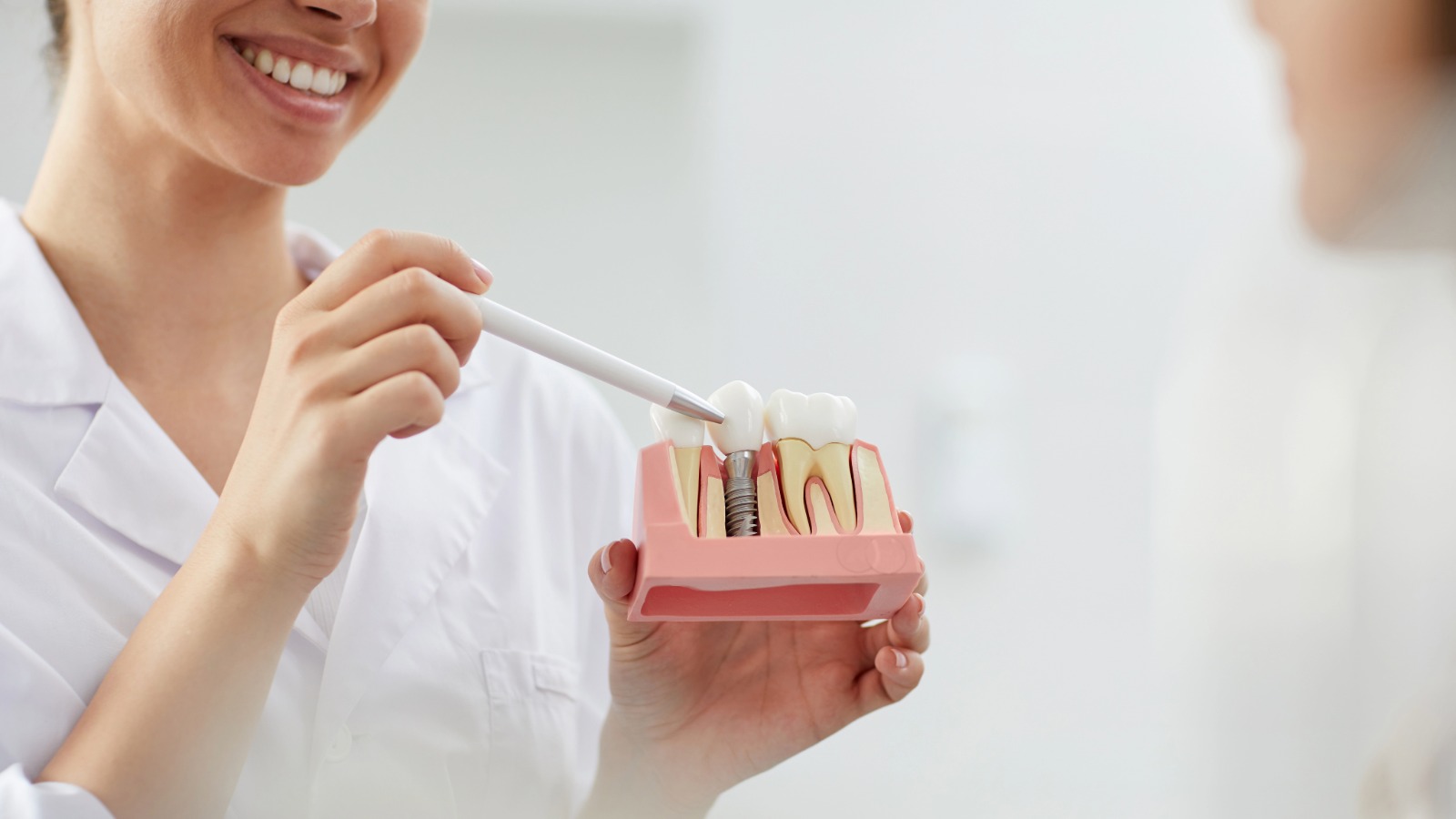
Full mouth reconstruction is a comprehensive treatment plan that addresses most or all of the teeth, restoring function, structure, and appearance through a coordinated sequence of procedures. Dental implants are a specific tooth replacement technology: a titanium root placed surgically in the jawbone, topped with a custom crown.
When a full mouth reconstruction plan includes teeth that are missing or that will need to be extracted, implants are often the optimal method for replacing them. The implant provides the same root stimulation that preserves jawbone, supports a restoration with natural biting function, and does not require altering adjacent teeth the way a bridge does.
The intersection point is this: the presence of implants in a full mouth plan changes when certain things happen, how the bite is designed, and how the different phases of the case have to be sequenced. Understanding that is what this post is for.
When Implants Become Part of the Reconstruction Plan
The clinical assessment that determines whether implants are part of a reconstruction plan involves evaluating each tooth individually: which teeth can be saved, restored, or maintained, and which cannot.
Teeth beyond saving typically include those with severe decay that has reached the root, vertical fractures that compromise the structural integrity of the tooth, advanced bone loss around the root from periodontal disease, or teeth that are already missing. For each tooth in this category, the question becomes: what replaces it?
Implants are appropriate when there is adequate bone volume and density at the site, no uncontrolled systemic or periodontal conditions that would compromise healing, and when a bridge is not the clinically preferred option (for example, when adjacent teeth are healthy and should not be prepared for crowns). The clinical assessment determines which teeth in the reconstruction plan require implants and which can be addressed with other restorations.
Goldstein Dental Center handles the restorative and planning phase. Dr. Bruce Edelstein handles surgical placement in approximately 90% of cases; Dr. Christopher Pesut in others.
How Implants Change the Reconstruction Timeline
Implant placement requires a healing period called osseointegration, during which the jawbone bonds to the titanium post. This process takes 3 to 6 months and cannot be shortened. In a full mouth reconstruction plan, this healing period has to be built into the sequence.
For most cases, implants are placed first, allowed to integrate, and then the final implant crowns are fabricated as part of the overall restorative phase. This means the extraction of failing teeth, placement of the implants, and the osseointegration period all precede the completion of the crown and bridge work for the rest of the mouth. At Goldstein Dental Center, patients are never left without teeth during this process. Provisional restorations are made so you can go to work, maintain your social life, and feel confident throughout every phase of treatment.
For full mouth cases that include bone grafting before implant placement, which is required when there is insufficient bone volume at the site, additional time is needed. Bone grafting adds 3 to 4 months before implants can be placed. A case involving multiple implants with grafting needs can extend the total timeline to 10 to 12 months.
This is not a drawback of implant-inclusive reconstruction. It is the clinical reality of building a restoration that is designed to last 20 or more years. Rushing the osseointegration phase compromises implant stability. The timeline cannot be negotiated down without consequences.
All-on-4, 5 or 6 vs. Individual Implants Within a Reconstruction Plan
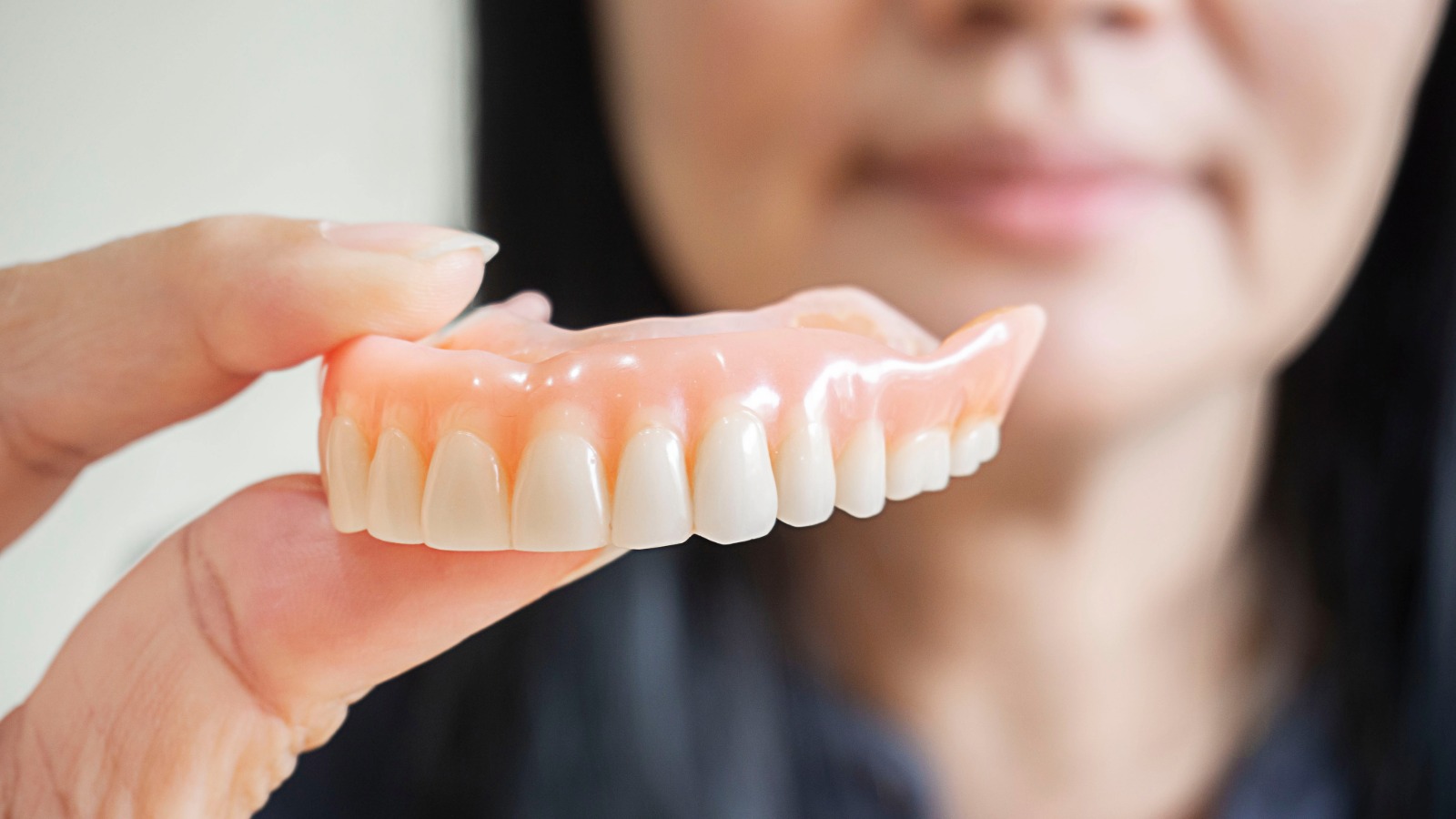
All-on-4, 5 or 6 is a specific implant protocol designed for patients who have lost all or nearly all of their teeth in an arch. Four or more implants are placed at specific angles to support a full-arch fixed prosthesis. It is an efficient, well-documented solution for complete edentulism, and for the right patient, it produces excellent functional and aesthetic results, with new teeth placed the same day the implants are inserted.
Individual implants within a full mouth reconstruction plan are a different clinical conversation. They address specific missing teeth within a mouth that retains other natural teeth and existing restorations. The goal is not to replace an entire arch with a prosthesis but to incorporate implant-supported crowns or bridges as part of a coordinated restoration that preserves and works alongside remaining natural teeth. Keeping natural teeth typically gives patients better proprioception when chewing and speaking, and the sense that only the problem teeth have been addressed.
Choosing between these approaches depends on how many natural teeth remain, the condition of those teeth, the bone volume throughout the arch, and the patient’s long-term functional and aesthetic goals. A prosthodontist evaluates these factors together rather than recommending one solution as the default. At Goldstein Dental Center, those conversations happen case by case, with an honest review of the advantages and disadvantages of each approach for your specific situation, not a single protocol applied to every patient.
The Prosthodontist’s Role: Backward Planning
The concept that separates prosthodontic implant planning from general implant placement is backward planning: designing the final restoration before the implant is placed.
The position, angle, and depth of an implant are determined by the crown that will go on top of it. A crown that needs to sit at a specific angle to integrate with the bite and adjacent teeth requires an implant placed at a specific position to support it correctly. If the implant is placed first without the restorative design being finalized, the crown design is constrained by whatever position the implant ended up in. That is the wrong sequence.
At Goldstein Dental Center, the final restoration is designed before the surgical phase begins. The plan for each crown and bridge goes to the surgical team before placement. Using 3D planning software, a surgical stent is designed to guide exact implant angulation, so placement precisely supports the planned restoration. The bite, the aesthetics, and the function are all determined before the surgical phase begins.
This is the technical differentiator that most general dentists cannot claim with the same authority, because it requires prosthodontic training and a coordinated surgical team relationship to execute correctly.
What Candidacy Evaluation Looks Like
For any full mouth case that includes implants, the candidacy evaluation goes beyond checking whether the patient wants implants. It includes:
- Cone beam CT imaging of all planned implant sites to assess bone density, volume, and proximity to nerves and sinuses
- Periodontal evaluation to confirm that gum disease is controlled before any surgical intervention
- Assessment of overall health factors that affect healing, including diabetes, medications that affect bone metabolism, and smoking history
- Evaluation of the existing teeth to determine which will be maintained, which need restoration, and which require extraction
- Occlusal analysis to understand how the bite will need to function across the full restoration plan
This evaluation takes more time than a simple implant consultation because it is evaluating an entire mouth, not a single tooth replacement. A practice that completes this evaluation in a single short appointment has not completed it properly.
How Dr. Goldstein Manages These Cases
Dr. Goldstein manages full mouth reconstruction cases that include implants as the restorative and planning specialist. The planning process begins with the final result: what does the completed mouth look like, how does the bite function, and which restorations are needed? The surgical phase is then planned around that design.
Surgical placement is handled by Dr. Bruce Edelstein, a top periodontist in Atlanta, who handles the majority of Goldstein Dental Center’s surgical referrals. The relationship between Dr. Goldstein and Dr. Edelstein is a coordinated one: the prosthodontist and the surgeon are working from the same plan. Patients are not passed between two providers who do not communicate. They are managed by a team.
Dr. Goldstein and Dr. Edelstein work from shared 3D planning software and surgical guides designed before placement begins. The restorative and surgical phases are planned together, not handed off sequentially. For patients evaluating full mouth reconstruction that includes implants, the consultation at Goldstein Dental Center begins that planning process with a clinical assessment, imaging review, and a clear picture of what the case requires and why.
Schedule a Full Mouth Reconstruction Consultation
Serving patients in Buckhead, Atlanta, Sandy Springs, Roswell, Alpharetta, and surrounding communities.
Frequently Asked Questions
Can you get dental implants as part of full mouth reconstruction?
Yes. When a full mouth reconstruction plan includes missing or failing teeth, implants are often the most appropriate replacement option. The implants are incorporated into the overall treatment plan and sequenced to allow for osseointegration before the final restorative work is completed.
How many implants do you need for a full mouth reconstruction?
The number of implants depends on how many teeth are missing or need to be extracted as part of the reconstruction plan. A case that involves two missing teeth requires two implants (or possibly an implant-supported bridge using fewer implants for multiple teeth). A case replacing an entire arch may use 4 to 8 implants depending on the protocol. There is no standard number; it is determined by the specific clinical situation. At Goldstein Dental Center, the options are reviewed together with the patient, and a plan is built around what makes clinical and practical sense for your individual case.
What is the difference between All-on-4 and full mouth reconstruction?
All-on-4 is a specific protocol for replacing all or most teeth in an arch using four implants to support a fixed prosthesis. It is designed for patients who have lost most or all of their teeth. Full mouth reconstruction is a broader category that addresses the restoration of most or all teeth, including both natural teeth that can be saved and replacement of those that cannot, using whatever combination of crowns, bridges, and implants the case requires.
How long does full mouth reconstruction with implants take?
Cases involving implants typically require 12 to 18 months from consultation to final placement. Cases requiring bone grafting before implant placement may extend to 10 to 12 months. The osseointegration period (3 to 6 months after placement) cannot be shortened. At Goldstein Dental Center, provisional restorations are made throughout so you always have teeth to function with and a smile to present during every phase of treatment.
Does insurance cover implants in full mouth reconstruction?
Implant coverage varies significantly by insurance plan. Some plans cover a portion of the implant, abutment, or crown; many do not cover implants at all. The restorative crown may have coverage as a restorative procedure. Review your specific plan and request pre-authorization for planned implant procedures before treatment begins.
Can I get full mouth reconstruction if I have bone loss?
Bone loss does not necessarily disqualify you from implant-inclusive reconstruction. Moderate bone loss at specific sites may be addressable with bone grafting before implant placement. Significant generalized bone loss requires assessment to determine whether grafting is practical and whether implants are a viable option. A cone beam CT evaluation is necessary to assess bone volume at each planned implant site. This 3D imaging can also identify areas of denser bone where implant placement at specific angles may avoid the need for grafting entirely, saving both time and cost.
Learn more on our blog!
Stay up to date on your dental health and hygiene with our blog!